Do Cannabinoids Actually Work Better Together? The Science Behind the Entourage Effect, Explained
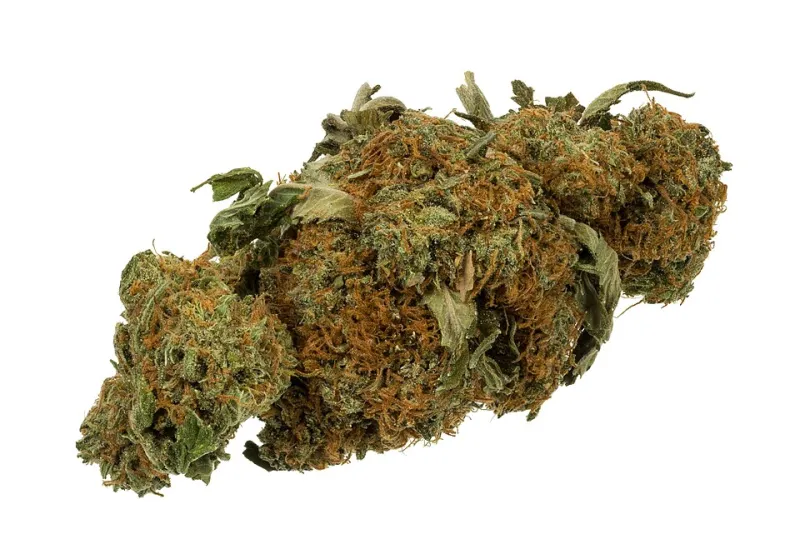
Photo: Evan-Amos, Public domain, via Wikimedia Commons
Walk into any CBD shop or scroll through enough product pages and you'll inevitably run into the phrase "entourage effect." It's become a kind of golden ticket claim in cannabinoid marketing — the idea that CBD, THC, terpenes, and other plant compounds somehow amplify each other's benefits when they're consumed together. Full-spectrum gummies, in particular, lean hard into this concept.
But here's the thing: the science is a lot messier than the marketing suggests. And if you're trying to make a genuinely informed decision about what kind of CBD gummies to buy, you deserve a clearer picture of what researchers actually know — and what they're still figuring out.
Where the Idea Came From
The entourage effect concept was first introduced by Israeli researchers Shimon Ben-Shabat and Raphael Mechoulam back in 1998. Their work suggested that inactive compounds in cannabis might enhance the activity of the active ones — essentially, that the whole plant could be greater than the sum of its parts.
Mechoulam, widely regarded as the godfather of cannabis research, later expanded on this with a 2011 paper co-authored by researcher Ethan Russo, which proposed that cannabinoids and terpenes working in combination could produce broader therapeutic benefits than isolated compounds alone. That paper became enormously influential — and for many in the CBD industry, it became the scientific foundation for full-spectrum product claims.
The problem? It was largely a hypothesis built on preliminary evidence, not a definitive clinical verdict. And the research landscape has grown considerably more complicated since then.
What Peer-Reviewed Studies Actually Show
Let's be fair: there is legitimate scientific interest in cannabinoid synergy, and some early findings are genuinely promising. Preclinical studies — meaning research conducted in lab settings or on animal models — have shown that certain cannabinoid combinations can produce different effects than individual compounds in isolation. A 2020 study published in the British Journal of Pharmacology found some evidence that minor cannabinoids like CBG and CBC could interact with CBD in ways that affected cellular responses.
Terpenes have also gotten attention. Linalool, myrcene, and beta-caryophyllene (all found in hemp plants) have demonstrated biological activity in their own right. Some researchers believe these aromatic compounds could interact with the endocannabinoid system or modulate cannabinoid receptor activity.
But here's where things get complicated: most of this research is still happening in petri dishes or in rodents. Human clinical trials specifically designed to test the entourage effect in CBD gummies or similar products are surprisingly scarce. The jump from "this looks interesting in a lab" to "this is why you should buy full-spectrum gummies" is a significant one — and the CBD industry has often made that leap without enough evidence to back it up.
A 2019 review published in Trends in Pharmacological Sciences actually pushed back on the entourage effect narrative directly, noting that the evidence base was weaker than commonly portrayed and that some cannabinoid combinations showed no meaningful synergy at all. The authors called for more rigorous, controlled human studies before broad claims could be justified.
Why the Research Is Still Evolving
Part of the challenge here is structural. Cannabis research has faced decades of legal and regulatory barriers in the United States, which has made it genuinely difficult to conduct large-scale, well-funded clinical trials. The federal classification of cannabis as a Schedule I substance created real obstacles for researchers trying to study cannabinoid interactions under controlled conditions.
That's starting to change — slowly. The 2018 Farm Bill's legalization of hemp opened up more research pathways for CBD specifically, and there's growing NIH interest in cannabinoid science. But we're still in early innings. Many of the studies that exist use small sample sizes, inconsistent dosing protocols, or non-standardized product formulations, which makes it hard to draw firm conclusions.
The honest reality is that the entourage effect might be real, might be partially real, or might be highly dependent on specific compound ratios that vary wildly from product to product. We just don't know enough yet to say definitively.
What This Means for Your Gummy Choice
So should you ditch full-spectrum CBD gummies entirely? Not necessarily. Here's a more nuanced way to think about it.
If you've tried full-spectrum gummies and feel like they work well for you — whether for winding down before bed, managing everyday tension, or supporting general wellness — that personal experience is valid. Individual biochemistry varies enormously, and anecdotal evidence from millions of CBD users isn't nothing, even if it's not a clinical trial.
What you shouldn't do is pay a significant premium for a full-spectrum product based purely on the promise that the entourage effect will deliver dramatically superior results. The science doesn't yet support that level of certainty.
Broad-spectrum products (which contain multiple cannabinoids but no detectable THC) and CBD isolates (pure CBD only) have their own legitimate use cases. For people who are drug tested regularly, work in industries with zero-tolerance policies, or simply prefer to avoid any THC exposure, isolate or broad-spectrum gummies can still be genuinely effective options — without the entourage effect framing being necessary to justify them.
Red Flags to Watch For
When a brand makes sweeping entourage effect claims without any supporting research citations, that's worth noting. A few things to look out for:
- Vague language like "synergistic formula" without specifics — this is often marketing filler
- No third-party lab testing — reputable brands will have Certificates of Analysis (COAs) confirming what's actually in their product
- Overblown health claims — the FDA prohibits CBD companies from claiming their products treat or cure diseases, so any brand making those promises is already operating outside the rules
- No transparency about cannabinoid ratios — if they're claiming entourage effect benefits, they should be able to tell you exactly what's in the gummy and in what concentrations
The Bottom Line
The entourage effect is a genuinely interesting scientific concept that deserves continued research — and some of that research is encouraging. But right now, it's more of a working hypothesis than a proven mechanism, and the CBD industry has run well ahead of the evidence in how it markets this idea to consumers.
That doesn't mean full-spectrum gummies are a scam. It means the reasons to choose them (or not) should be based on realistic expectations, personal response, and product quality — not on the assumption that you're unlocking some scientifically proven synergy machine.
Stay curious, read the labels, check the lab reports, and remember that the best CBD gummy for you is the one that actually fits your life — regardless of what the marketing says about how the cannabinoids are getting along inside it.