Behind the Certificate: What Third-Party Lab Testing Really Tells You About Your CBD Gummies
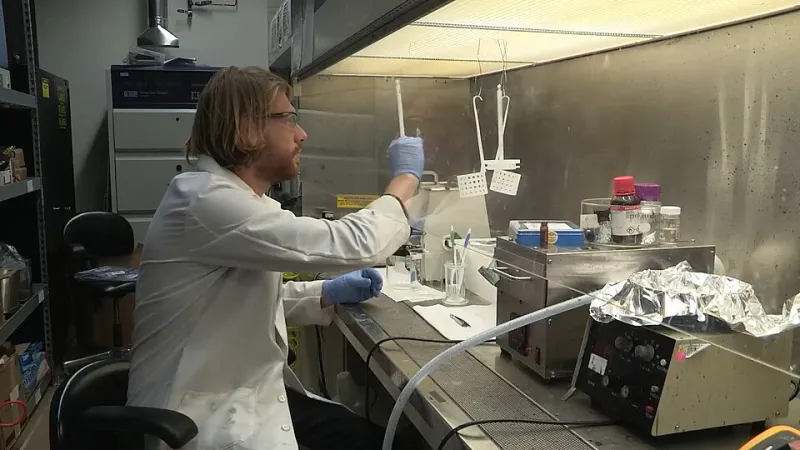
Photo: Stanford ENERGY, Video by Mark Shwartz, CC BY 2.5, via Wikimedia Commons
You've probably seen it plastered across CBD packaging like a gold star on a kindergarten assignment: third-party tested. It sounds reassuring. It's supposed to. But here's the thing — not all lab testing is created equal, and for consumers trying to make smart choices about their cannabinoid wellness routine, understanding what that phrase actually means can be the difference between a product that delivers and one that's basically overpriced candy.
Let's pull back the curtain.
What "Third-Party Testing" Actually Means
In the simplest terms, third-party testing means that an independent laboratory — one that has no financial stake in the product passing or failing — analyzes a sample of the CBD gummies and reports what it finds. The key word here is independent. A brand testing its own products in-house is a bit like grading your own homework. Third-party labs, on the other hand, are paid for their analysis services, not for favorable results.
Reputable labs are typically accredited by organizations like ISO/IEC 17025, which sets the global standard for testing and calibration laboratories. In the US, you'll sometimes see labs that are also registered with the DEA, which is required when testing for controlled substances like THC. These accreditations aren't just bureaucratic checkboxes — they signal that the lab operates under strict quality controls and that its results can be trusted.
What the Lab Is Actually Testing For
This is where things get interesting — and where a lot of consumers get lost. A thorough third-party analysis of CBD gummies typically covers several distinct categories:
Potency and Cannabinoid Profile
First and foremost, labs verify whether the product actually contains what the label claims. If a gummy says it has 25mg of CBD per piece, the lab will confirm whether that number is accurate. This matters more than most people realize. Studies have found that a significant percentage of CBD products on the market are either over- or under-dosed compared to their labels — sometimes by wide margins.
Beyond CBD, labs also map out the full cannabinoid profile: THC, CBG, CBN, CBC, and any other compounds present in the formula. For anyone subject to workplace drug testing, knowing the exact THC content isn't just a preference — it's a necessity.
Contaminant Screening
Hemp is what's called a bioaccumulator, meaning it absorbs whatever is in the soil around it — including things you definitely don't want to eat. Labs screen for:
- Heavy metals like lead, arsenic, mercury, and cadmium
- Pesticides and herbicides that may have been used during cultivation
- Residual solvents left over from the extraction process
- Microbial contaminants including mold, yeast, and bacteria like E. coli and Salmonella
A clean bill of health across all these categories is what separates a product you can feel good about from one that could genuinely cause harm.
Terpene Profiles (for Full-Spectrum and Broad-Spectrum Products)
More sophisticated labs also analyze terpene content, which matters if you're buying full-spectrum or broad-spectrum gummies and hoping to benefit from the entourage effect — the idea that cannabinoids and terpenes work better together than in isolation. Knowing the terpene profile helps you understand what you're actually getting beyond just CBD.
Reading a Certificate of Analysis (COA)
The document that comes out of all this testing is called a Certificate of Analysis, or COA. Think of it as the report card for your gummies. A legitimate COA will include:
- The name of the testing laboratory and its accreditation information
- The name of the product being tested and the batch or lot number
- The date the sample was tested
- Results for each category of analysis, with pass/fail indicators where applicable
- The detected levels of each cannabinoid, usually expressed in milligrams per gram or as a percentage
One thing to watch for: the batch number on the COA should match the batch number on the product you actually purchased. Some brands post a single COA on their website and never update it, meaning you have no idea whether the batch sitting in your hand was tested at all. Freshness of the COA matters — ideally, it should be less than a year old and correspond to a current production run.
You can usually find COAs on a brand's website, but many reputable companies also include a QR code directly on their packaging that links to the relevant document. That's a good sign.
Red Flags That Should Make You Walk Away
Now for the part that really matters when you're standing in front of a shelf or scrolling through a product page. Here are the warning signs that a brand's testing claims might not hold up:
No COA available at all. If a company claims to be third-party tested but won't share documentation, that's not a transparency issue — it's a trust issue. Full stop.
COAs from labs that can't be verified. It's worth doing a quick search on the lab listed in a COA. If the lab doesn't have a web presence, isn't accredited, or seems to exist primarily to produce favorable results for cannabis companies, treat those results with serious skepticism.
Testing only for potency, not contaminants. A COA that confirms CBD content but doesn't include pesticide, heavy metal, or microbial screening is doing half the job. In the absence of robust federal oversight for CBD products, contaminant testing is one of the most important consumer protections available.
Results that seem suspiciously perfect. Real lab results have some variation. If every single product from a brand comes back with cannabinoid levels that match label claims down to the decimal, that's unusual — and worth questioning.
Outdated certificates. A COA from two years ago tells you very little about what's in the bottle you're about to buy. Formulas change, suppliers change, and production conditions vary.
Why This Matters More Than the Marketing
Here's the reality of the current CBD landscape: the FDA has not established comprehensive regulations for hemp-derived CBD products sold as dietary supplements or wellness products. That regulatory gap puts the burden of verification squarely on consumers and on brands that choose to operate ethically.
Third-party lab testing is, at this point, the industry's primary self-regulatory mechanism. It's the closest thing to a quality guarantee that exists in this space. Brands that invest in rigorous, transparent testing are essentially saying: we have nothing to hide, and we want you to know exactly what you're putting in your body.
For anyone building a genuine cannabinoid wellness routine — whether that's using CBD gummies to support better sleep, manage post-workout recovery, or simply find a little more calm in a chaotic day — that transparency isn't a bonus feature. It's the baseline.
So next time you're evaluating a new brand, skip past the lifestyle photography and the feel-good copy. Find the COA. Check the date. Verify the lab. That's where the real story lives.