Isolate, Broad-Spectrum, Full-Spectrum: Cutting Through the CBD Gummy Label Confusion
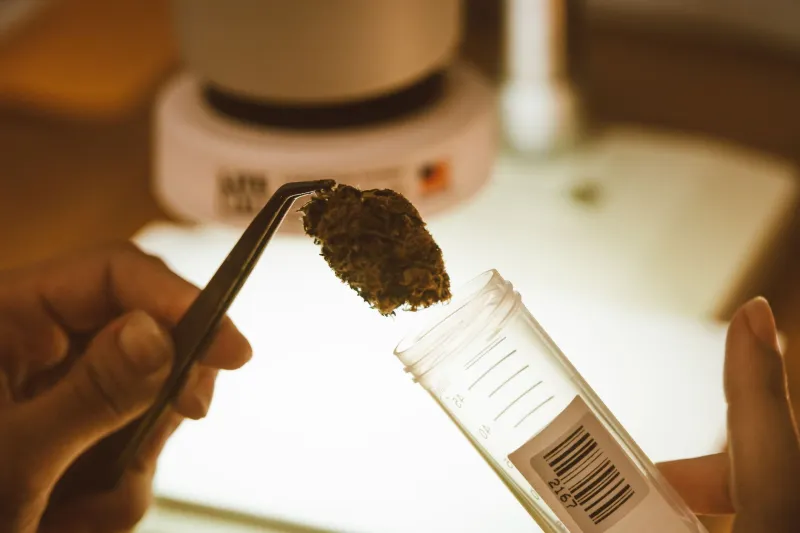
If you've spent more than five minutes shopping for CBD gummies online, you've encountered the terminology. Isolate. Broad-spectrum. Full-spectrum. Maybe accompanied by phrases like "the entourage effect" or "whole-plant synergy" or "pure CBD with zero THC." The marketing language is confident. The actual explanations? Usually thin.
This guide is meant to fix that. No advocacy, no agenda—just a clear breakdown of what each category actually contains, what the science says (and doesn't say), and a practical framework for deciding which type makes sense for you.
Starting at the Source: What's Actually in Hemp
To understand these three categories, you need a quick picture of what's inside the hemp plant to begin with. Hemp contains hundreds of naturally occurring compounds—cannabinoids like CBD, CBG, CBN, and trace amounts of THC; terpenes that give the plant its distinctive aroma; flavonoids; and various plant lipids and chlorophylls. The three CBD spectrum categories differ based on how many of these compounds survive the extraction and refinement process.
CBD Isolate: The Purest Form
CBD isolate is exactly what it sounds like—CBD extracted and isolated from everything else in the plant. The result is typically a white crystalline powder or oil that is 99%+ pure cannabidiol, with no other cannabinoids, terpenes, or plant compounds present.
For gummies, isolate is dissolved into the formulation, producing a product that delivers a precise, consistent dose of CBD and nothing else.
What it's good for: Isolate gummies are a solid choice for people who need to avoid THC entirely—whether for professional drug testing reasons, personal preference, or sensitivity concerns. They're also appealing to consumers who want simplicity: one compound, known quantity, no variables.
What it doesn't offer: Because all other plant compounds are removed, isolate products don't benefit from any potential synergistic interactions between cannabinoids. Whether that matters depends on what you believe about those interactions—more on that in a moment.
Common misconception: More milligrams of isolate doesn't automatically mean a stronger effect. Potency isn't purely arithmetic in cannabinoid wellness.
Broad-Spectrum: The Middle Ground
Broad-spectrum CBD sits between isolate and full-spectrum. It retains most of the hemp plant's naturally occurring cannabinoids and terpenes but goes through additional processing to remove THC specifically. The goal is to deliver more of the plant's compound profile while keeping THC at non-detectable levels.
In practice, broad-spectrum formulations vary considerably between brands. Some retain a rich array of minor cannabinoids like CBG and CBC; others have a more stripped-down profile that's only marginally different from isolate. The label alone won't tell you which you're getting—this is where third-party Certificates of Analysis (COAs) become essential reading.
What it's good for: Broad-spectrum is often the default recommendation for people who want more than just isolated CBD but have concerns about THC—whether those concerns are legal, professional, or personal. It's also a reasonable middle-ground option for consumers who aren't sure where to start.
What to watch for: "THC-free" on a label doesn't always mean fully non-detectable. Some brands use this phrase loosely. If THC avoidance is a firm requirement for you, look for COAs that specifically show THC below the limit of detection (LOD), not just below 0.3%.
Full-Spectrum: The Whole Plant Approach
Full-spectrum CBD gummies use an extract that retains the full range of naturally occurring compounds from the hemp plant, including cannabinoids, terpenes, flavonoids—and yes, THC. Under federal law, hemp-derived products must contain 0.3% THC or less by dry weight, so full-spectrum gummies are legal at the federal level, though state laws vary and it's worth checking your local regulations.
The trace THC in full-spectrum products is generally not enough to produce intoxicating effects in most people at standard doses. However, it can accumulate with regular use and may show up on drug tests—something users should factor into their decision.
What it's good for: Full-spectrum is the format most associated with the "entourage effect" hypothesis—the idea that hemp's compounds work more effectively together than any single compound does in isolation. It's popular among experienced CBD users and those who prefer a whole-plant philosophy.
The drug test reality: This deserves plain language. If you are subject to workplace drug testing, full-spectrum CBD gummies carry real risk. THC metabolites can accumulate in body fat and trigger positive results even when individual doses seem small. This isn't a fringe concern—it happens.
So, Is the Entourage Effect Real?
This is where the conversation gets genuinely complicated, and where a lot of CBD marketing oversimplifies things considerably.
The entourage effect is a hypothesis—first proposed by Israeli researcher Raphael Mechoulam—suggesting that cannabinoids and terpenes interact synergistically, producing effects greater than any single compound alone. It's a compelling idea, and there is some preclinical research (mostly in cell and animal studies) that supports the concept.
However, robust human clinical trials specifically testing full-spectrum versus isolate formulations in real-world conditions are limited. The evidence isn't strong enough to make definitive claims in either direction. Some users report noticeably different experiences with full-spectrum products; others notice no meaningful difference.
What this means practically: don't let "entourage effect" language be the sole driver of your purchasing decision. It's a reasonable hypothesis worth considering, not a proven mechanism you can bank on.
How to Actually Choose
Rather than prescribing a single answer, here's a practical decision framework:
Choose isolate if:
- You're subject to drug testing and need maximum THC avoidance
- You want simplicity and precise dosing
- You've had sensitivities to other hemp products and want to isolate variables
- Budget is a significant factor (isolate is typically the most affordable)
Choose broad-spectrum if:
- You want more of the plant's compound profile but need to avoid THC
- You're new to CBD gummies and want a reasonable starting point
- You're willing to read COAs carefully to understand what's actually in the product
Choose full-spectrum if:
- Drug testing is not a concern for you
- You prefer a whole-plant approach and are comfortable with trace THC
- You've tried isolate and want to experiment with a broader compound profile
- You're an experienced CBD user looking to explore different formulations
One More Thing: Read the COA
Regardless of which spectrum category you choose, the Certificate of Analysis from an independent third-party lab is your most important tool. It tells you what's actually in the product—not just what the label says. Look for testing from accredited labs, check that the COA matches the batch number on your product, and pay attention to both cannabinoid content and any contaminant screening results.
The CBD gummy market has matured significantly, but it's still an industry where label claims and actual contents don't always align perfectly. The COA closes that gap.
The Bottom Line
Isolate, broad-spectrum, and full-spectrum aren't rankings on a quality scale—they're different formulation approaches with different tradeoffs. The right one depends on your specific circumstances, priorities, and wellness goals. Understanding what's actually in each category, rather than relying on marketing language, puts you in a much stronger position to make a choice that genuinely fits your life.