What's Actually in That Gummy? A No-Nonsense Guide to Reading CBD Labels Without Getting Played
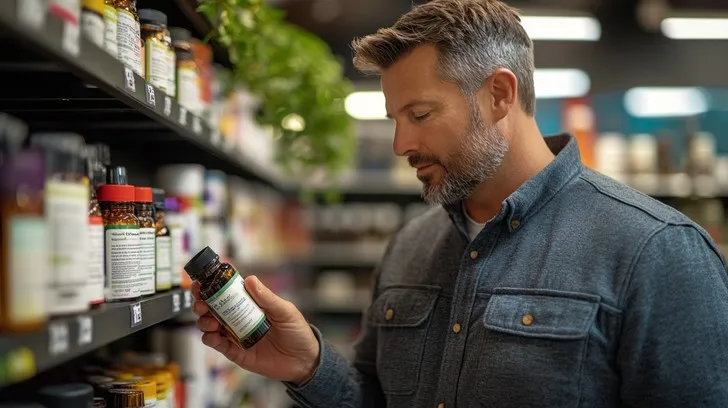
Photo: person reading supplement label in health store, via images.stockcake.com
Walk into any wellness shop or scroll through a CBD brand's website and you'll notice something pretty quickly: every single product looks like it was designed by a marketing team with a thesaurus and zero accountability. "Premium." "Pure." "Organically crafted." "Nano-enhanced." The words sound impressive, but do they actually mean anything?
Sometimes yes. Often no. And that gap is exactly where consumers get burned.
Reading a CBD gummy label isn't just about checking the milligram count and calling it a day. There's a whole layer of information—some useful, some deliberately vague—sitting right there in plain sight. Learning to decode it is genuinely one of the most practical skills you can build as a CBD buyer. So let's get into it.
Start With the Basics: What the Label Is Actually Required to Tell You
Here's a frustrating truth: CBD products in the US exist in a regulatory gray zone. The FDA hasn't established a formal framework for most CBD supplements, which means companies have a lot of latitude in how they present their products. That doesn't mean labels are a free-for-all, but it does mean you have to do more legwork than you would with, say, a bottle of ibuprofen.
At minimum, a legitimate CBD gummy label should clearly state:
- Total CBD content (in milligrams per package and per serving)
- Cannabinoid type — isolate, broad-spectrum, or full-spectrum
- Serving size with a suggested use
- Ingredient list in descending order by weight
- Manufacturer name and contact information
- A QR code or batch number linking to third-party lab results
If any of these are missing or buried in tiny print, that's your first yellow flag.
The Milligram Game: Per Gummy vs. Per Package
This one trips people up constantly. A bag might advertise "1500mg CBD" in big bold letters on the front, which sounds substantial. But flip it over and you might find there are 60 gummies in that bag—meaning each gummy contains 25mg. That's solid! But some brands will put 30 gummies in a bag and list "300mg total," making each gummy just 10mg.
Neither is inherently wrong, but the way it's presented can absolutely be misleading. Always do the math: total milligrams divided by number of gummies equals your per-serving dose. That number is what actually matters for your routine.
Isolate, Broad-Spectrum, Full-Spectrum: The Spectrum Isn't Just Marketing
These three terms describe what's in the extract, and they're not interchangeable.
- CBD isolate is pure CBD—everything else has been stripped away. It's THC-free and consistent, but you miss out on the synergy of other plant compounds.
- Broad-spectrum includes multiple cannabinoids and terpenes but has THC removed (or reduced to non-detectable levels).
- Full-spectrum keeps the whole cannabinoid profile intact, including up to 0.3% THC (the federal legal limit for hemp-derived products).
A label that just says "hemp extract" without specifying which type? That's vague by design. Push for clarity, or look for a brand that offers it upfront.
Ingredient Lists Don't Lie—If You Know How to Read Them
The ingredient list is where a lot of brands quietly reveal themselves. A few things to watch for:
Artificial dyes and synthetic additives. If you're reaching for a wellness product, a label loaded with Red 40 and high-fructose corn syrup is worth noting. It's not a dealbreaker for everyone, but it does say something about the brand's overall approach to ingredients.
Vague terms like "hemp oil" or "hemp seed oil." Hemp seed oil is pressed from seeds and contains no CBD whatsoever. It's a perfectly fine ingredient for moisture or nutrition, but it is not a CBD source. Brands that lead with "hemp" without specifying "hemp extract" or "CBD isolate" may be trying to blur that line.
Prop 65 warnings (if you're in California). These are state-specific, but worth knowing: some CBD products trigger California's Prop 65 labeling requirements due to trace heavy metals or other compounds. A brand that's done the work to test for contaminants will usually have cleaner lab reports to back it up.
Sourcing Claims: What "Organic" and "US-Grown" Actually Mean
You'll see a lot of "farm-to-table" energy in CBD marketing. Terms like "organically grown," "Colorado hemp," and "non-GMO" are everywhere. Here's how to sort the signal from the noise:
- USDA Organic certification is a real, regulated label. If a brand claims "organic," look for the actual USDA seal—not just the word organic in their marketing copy.
- "US-grown hemp" does matter, because US hemp farms are subject to state agricultural programs and federal oversight. Imported hemp operates under different (and sometimes less rigorous) standards.
- "Non-GMO" is largely symbolic for hemp, since there are no commercially approved GMO hemp strains in the US, but it's not harmful to see.
Extraction Method: Why It's Worth Asking
How CBD is pulled from the plant matters for both quality and safety. CO2 extraction is considered the gold standard—it's clean, efficient, and doesn't leave behind solvent residues. Ethanol extraction is also widely used and generally safe when done correctly.
What you don't want is cheap hydrocarbon extraction (butane, propane) without rigorous testing to confirm residuals have been removed. Most reputable brands will mention their extraction method on the label or their website. If you can't find it anywhere, that's worth a quick email to their customer service before you buy.
Third-Party Lab Reports: The Proof Behind the Claims
This is non-negotiable. Any brand worth your money should offer a Certificate of Analysis (COA) from an independent, accredited lab—not a lab they own or partner with financially. These reports should confirm:
- Cannabinoid potency (does the product actually contain what it claims?)
- Absence of pesticides, heavy metals, and residual solvents
- Microbial testing (mold, bacteria)
- THC levels within legal limits
If the COA is hard to find, outdated (more than a year old), or only available for the "formula" rather than the specific batch you're buying, treat that as a red flag. Batch-specific testing is the real standard.
The Red Flag Checklist at a Glance
Before you toss a new CBD gummy into your cart, run through this quick mental checklist:
- ❌ No per-gummy CBD amount listed (only total package amount)
- ❌ Label says "hemp oil" or "hemp seed oil" instead of "CBD" or "hemp extract"
- ❌ No QR code or batch number linking to lab results
- ❌ COA is missing, outdated, or only available for a generic formula
- ❌ No manufacturer contact information
- ❌ Claims to "cure" or "treat" any medical condition (this is illegal under FDA rules)
- ❌ Extraction method nowhere to be found
- ❌ Sourcing claims with no certification to back them up
The Bottom Line
Getting comfortable with CBD labels takes a little practice, but once you know what you're looking at, it becomes second nature. The brands doing things right are usually happy to be transparent—they'll put the COA front and center, explain their sourcing, and give you a clear per-serving dose without making you do algebra.
The ones cutting corners tend to rely on flashy packaging and vague buzzwords to carry them. Now that you know the difference, you're not the one getting played.